Descriptions of Clinical and Surgical Procedures
Aortic Hemiarch and Valve Replacement for Severe Aortic Stenosis with Ascending Aortic Ectasia
Manuscript Format: Full Text
Transcription
CHAPTER 1
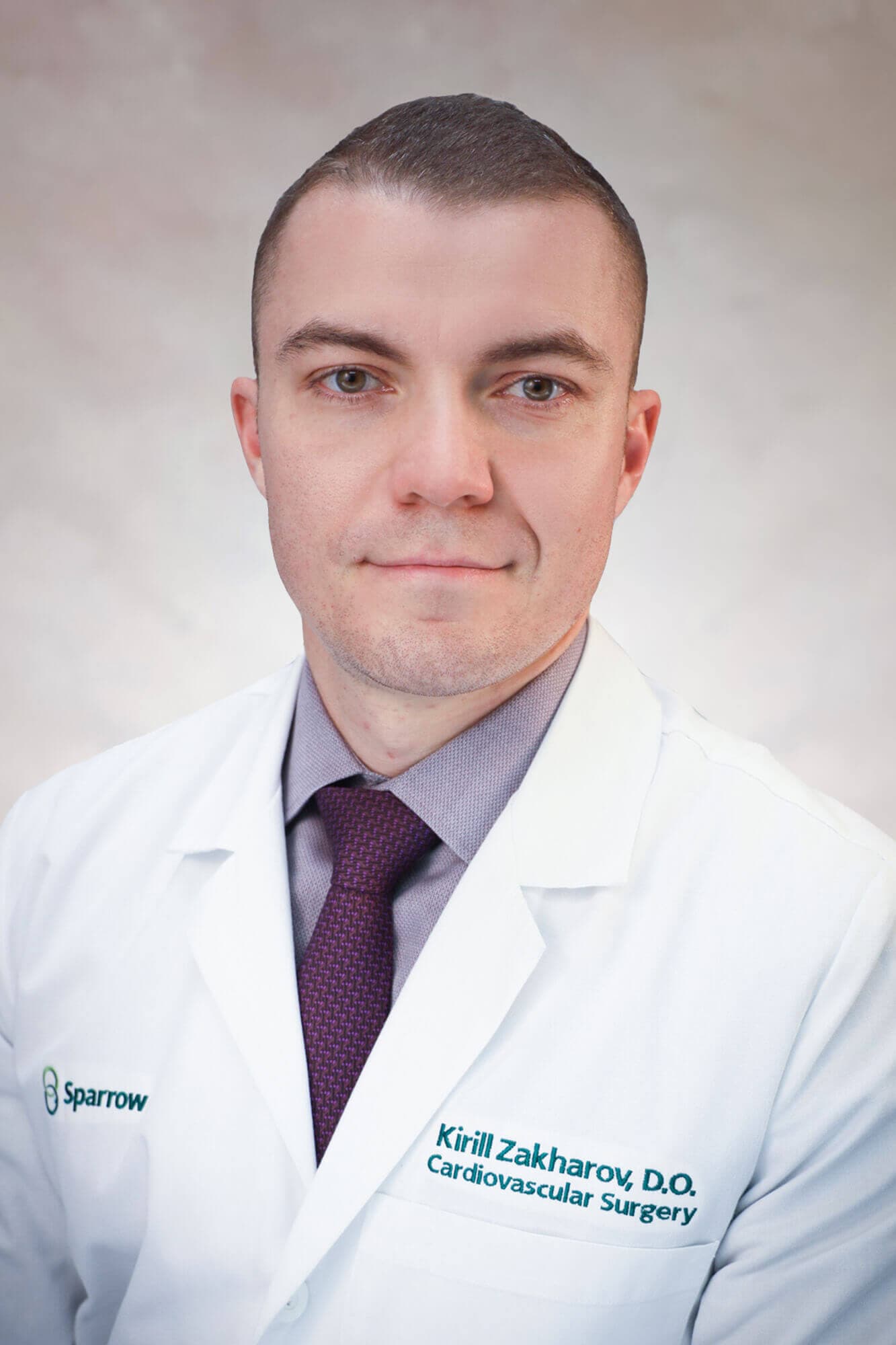
My name is Dr. Kirill Zakharov I'm one of the cardiac surgeons here at University of Michigan Health-Sparrow in Lansing, Michigan. Today we're about to see a patient who's 50 years old, who came in with critical aortic stenosis with multiple syncopal events. He was also found to have ascending aortic aneurysm and aortopathy. So basically the surgery that you're about to see is gonna be an open heart surgery with replacement of patient's aortic valve and replacement of this patient's ascending aorta, and repair of his aneurysm. The flow of the surgery: first we're gonna prepare to go on cardiopulmonary bypass, so do a sternotomy, make sure everything is clean under the sternum, and safe to put the saw up the sternum. Then we're gonna dissect out the heart, create a pericardial well, get ready for cannulation by completely dissecting out the heart and aortic arch and the head vessels, at which point we'll go on cardiopulmonary bypass, putting an aortic cannula into the ascending aorta, venous return cannula into the right atrium, cardioplegic catheters into the ascending aorta and a retrograde cardioplegic catheter into the coronary sinus. We're also going to cool the patient slightly in order to protect his cerebral profusion. We're gonna do an alternate cannulation technique where we cannulate the distal ascending aorta and clamp between the patient's carotid and innominate arteries, so that way he gets unilateral cerebral profusion and full body profusion during the duration of our sewing. The particular interesting parts of this case is that we use this alternate cannulation method in order to not arrest the patient's cerebral profusion. We used a mechanical valve because of this patient's young age and need for lifelong durability of the valve, and the replacement of the ascending aorta is particularly interesting as well.
CHAPTER 2
Knife back. There you go. Okay, I won't need the scissors. No scissors. Lungs down, please. Lungs back up. Doesn't have any tissue. Yeah, he's pretty skinny. A little bone wax for the bone marrow. Give me that for a second. Dry lap. Bone wax. Towels. We'll use pledgeted on the aorta this time. The second stitch, Crystal, will be pledgeted. For the aortic cannulation. Same, what I always do.
CHAPTER 3
What's my Bovie on? Bringing up the pericardium here. Let's go find the innominate vein. Dry lap. Clip. All right, let's open up the pericardium now. First structure that you see when you open up the pericardium is what? Ronald? The right ventricle. And also, when you open up the pericardium also the most commonly-injured structure during trauma, penetrating trauma. Okay. Just 'cause it's the most anterior. Clip. Clip. Bovie. Let's do one more clip. Take the aorta towards you. So the anatomy: this is the ascending aorta, the is the innominate vein, see so far. Push the innominate vein out of the way, protect it. Dissect out the aorta and the pericardium. Okay, let go. All right, dissect out the innominate vein more. Clip. One more. This basically frees it all up. What's that? It's the innominate artery. Yep. See how it comes off that way? Uh, lap, can I have a right angle, and a blue vessel loop. Something's bleeding over here. Suction. Bovie. Right angle. Snap. Are you a medical student? Yes. MSU? Yes. Welcome. Okay, lungs down. Now we're gonna put our pericardial stitches to create a pericardial well and expose the heart. All right, pick up.
CHAPTER 4
Hold that. Now because he's so young, we're gonna expect him to have a bicuspid aortic valve. Usually aortic valve, tricuspid aortic valves don't degenerate in their 50s, you know. Every now and then. Let's do a quick anatomy review. So this is the ascending aorta, and you see it's kind of dilated here, but it kinda tapers to an almost-normal diameter here. This is the pulmonary artery, and you can see in relation to the pulmonary artery how much enlarged the aorta is. Right ventricle, right atrial appendage, and here's the SVC right here. And that's all we can see so far. Nice work with the suction. Mm-hm. Nice. And you're starting to anticipate a lot better. Pick up over there. Let's give heparin, please. Heparin. When we do heart surgery we always wanna heparinize the patient in order to go in cardiopulmonary bypass. 30,000 units of heparin going in. Circumferentially dissect around the posterior of the aorta. Put your finger over that, Ron. Feel the whoosh? Mm-hm. You can almost hear it. You're not supposed to feel such a turbulent flow. In here we just encircle the aorta in order to have better control so we can dissect out the arch vessels. So here we have a really early takeoff of the innominate artery. Take that towards you. Do it with your finger so you have better control. You know what I mean? Yep. Pushing on the aorta. Thank you, sir. Mm-hm. So what I think we will do is we will do our clamp 'cause here we have clearly the innominate. But then we also have the subclavian. I see the subclavian takeoff. But here's the carotid.
CHAPTER 5
So what we're gonna do, do our alternate clamping, you know where we basically go to the underside of the innominate artery and do a hemiarch. Okay. We'll clamp between the innominate artery and the left carotid artery so we have unilateral warm cerebral profusion, and full-body warm perfusion. So I think we'll cool to 30 for that. 30, yep. Monitor head sats when we do that, make sure everything goes well. And we'll confirm that we have a flow in the right side of the brain by making sure that there's backflow from the innominate artery. Yeah. Do I need a different clamp in there? Yeah, we need the regular one first, but then the soft. 88 on the pressure. Has it been three minutes on the heparin? Yep, four minutes, and A line's coming down for ACT check. Okay, look out. When you say soft, do you mean the flexible one? Yep. Bovie. So we're like 60 on the left and 66 on the right. Yeah. Kind of baseline. Yep, so I think right there would be a decent spot to clamp. So nice arch anatomy here. You wanna take a look at that? So here's the innominate artery, carotid, subclavian takeoff right there. Nice, okay. I'll take the cannulation stitch. So if we want to put our clamp over here, let's say, right around like that, we wanna put our cannula over here. Don't pull that hard. You're doing good. Cannulate distal arch. Pledgeted? Yes, sir. Free pledget. Do we have an ACT? It's still running. It's just about baseline, 130. But it's been how long since the heparin? Eight minutes; nine minutes now. Metz. Pressure's okay. We need the pressure down. Pick up. Yeah, back up. Back up. Table down. You okay to clamp and divide? Yes. Come see the aortic cannula. Pressure's okay? Yes. Eleven blade. Keep holding. Not too much. Come out? Mm-hm. You see me? Distal arch? Hmm? Can I take a look? Mm-hm. Yep. Tip is in the distal arch. Good placement there? You're looking for subclavian. Yeah, past the subclavian. Cannula is well-positioned. No aortic injuries. Thank you. Hey, how are you? Good morning. How's it going? Good. Just cannulated distal arch. You're planning to replace the ascending aorta? Oh, yeah. It's big. Even on the echo. What's the echo measuring? 47. So I'm thinking, if he's 57, if I can get a 29 in, think just put a tissue valve in? 57. What was the patient preference? He was okay with either way, but he was fine with mechanical. But I'm thinking if I can get a 29 in, maybe that's even better. Twist up. What do you think? I think yeah, that's reasonable. Yeah, I'll see what I can fit in. PSA's 19, so... What's the annulus size? 28. 27, 28. But we'll see. Give me a Ray-Tec. Another Ray-Tec? Yeah. Yeah, yeah. Hold up. Okay, you're connected. Tie. Blood pressure looks good. See your bicuspid aortic valve. Mike, I'll wait 'til we get retrograde... Secure the aortic cannula twice. Okay, thank you. And we'll get the femoral. It's looks about ready. Pull it back a little bit. Press down on the aorta. All right, hold on. We'll do it later. Can we rerun it, I'm sorry. Give me the venous stitch. Both suckers are on. Over 500.
CHAPTER 6
Venous cannula to Ron. Scissors to me. Mm-hm, hold that. That's the venous return cannula going into the right atrial appendage. And then to the right atrium and IVC. Pull it back a little bit. Keep it there. You can let go of your, yep. Do you have an adequate ACT? We do. Are you wrapping? I was gonna wait 'til you got your retrograde. Okay, I appreciate that. I took a little bit off 'cause we had to pressure, but I was gonna hold off. Lungs down. Lungs down. Do you want these pledgeted? Did you run up your plege, Ron? Yes, all ran up. Non-pledgeted. Just a second, let me grab that.
CHAPTER 7
You don't have any... I don't have a cheater. No, no, but you don't have a... You have flow? Yeah, yeah, yeah. Okay. You're gonna probably need a male to male, I think? Table up, please. Male to male, thank you. Table up. I have that. Just take it out. You'll know if it's there or not. It's going in easy? Yep. Yeah, so you're good. Table up, please. That's good. Retrograde. Eleven blade. Lungs down. Retrograde's going in. Hmm. You see me? You're close, yep. Pressure's okay? Pressure in there, yep, MAP is 75. Am I close? Yep, there we go. Yeah, I'm in. Balloon. Good? Yep, looks good. All right, let me give you some help here, Blake. All right, thank you. Okay to breathe now? Yep. Breathing. Tie. Secure the cannula with a snare and tie. Cut. Give me a balloon back. You want some more fluid, or less- No, that's all right. Let me grab some of this. Pull. Uh, which way? Towards you. Yes. I cannot go the other way. Yeah. I'll take some more. Run up your pressure tubing. Running up. You're good. Okay, pulmonary sinus has changed to zero to 60. Got a good waveform? Beautiful. Run up your plege. Running up. Off. It's off. Did you say something to me earlier that I didn't acknowledge? Are you done wrapping? Yes, we are. You ready to go on? We are ready. You may commence cardiopulmonary bypass. All righty.
CHAPTER 8
And do we have that... Don't pull that too much. Gas is on. Is the art line good? It's not. What happened? There's no pullback. Okay, let me see. Okay, give me the ladder. I'm gonna change my gloves. Give me the pullback thing. Syringe. Stitch. Just hold it for like 10, 15 minutes, make sure there's no hematoma, please, 'cause of the heparin, you know. Yep. Run up your pressure tubing. Go ahead, you're in the patient. Give me a stitch. Change my gloves. Needle back. Flowing okay? Yeah, everything looks good. Correlating well? He's not a big guy, so it should be fine. We should be able to see hematoma if it develops, you know. Metz. Actually yeah, give me the Bovie. I have the Bovie. Don't worry about it.
CHAPTER 9
This is the SVC; dissect that out. Come in here; Metz. This is the, what is that Ron? What is this structure? The PA going underneath the SVC. Which side PA? Right. Metz. The right PA. And this is the pulmonary vein. Okay. Yep, right pulmonary vein. I'll leave that stitch. Leave a little volume in. Okay, leaving volume. Suck in there. Nerve hook. Take that off. Yeah, go a little bit higher with your retraction. Free pledget. Still holding volume. Yep. Give me an 11 blade. Pick up. Tonsil. Can we get the pump sucker? Yeah, you gotta get the pump sucker for this. Right side down. Right on. You can let go of your retraction. Where's your LV vent? You want me to take back my volume? Yep. Retrograde still good in the sinus there? Pick up. Hold that back like that. Right here. Mm-hm. Right here. Be careful in the right coronaries; it's right here. Holding it right there. Okay, let go. Go ahead. Yea, we didn't come close to it, right? Grab that right there. Take it towards you. With your finger. Suction. Okay, let go, let go.
CHAPTER 10
Antegrade stitch. Cut. Metz. Mosquito. Test your yellow. Okay, yellow's on. Scissors ready. Yellow off. Yellow off. Run up your plege. Run up. Off. Off.
CHAPTER 11
All right, we have the aortic inflow cannula, venous return cannula. We got antegrade, retrograde, and LV vent. I think we're good to clamp. We'll need the CO2 on in a second. Cross-clamp. I have the CO2 up. Pump down. Pump is down. Back up.
CHAPTER 12
Okay, back up, running antegrade. Run antegrade. Ron, is an LV vent up? LV up. And Ron is suturing in the CO2 line to fill the chest with CO2 rather than oxygen so it displaces oxygen and you don't get air in the heart. That's the reasoning behind that, scissors. Some ice. That's what I was thinking. LV's okay, or is it distended? Ooh, it feels distended. Off, root vent up. Go retro. We don't want a full LV; we want a nice emptied-out LV. Got a deflection? Still coming up; yeah, it looks good. Let me see your felt. Let me see the scissors. Let me see the pickup. Here we're just cutting felt strip to use as our felt sandwich on the proximal and distal aorta. Thick piece on the outside. It's too thin. This will go on the inside of the distal anastomosis. This'll go on the outside of the distal. And those will go, you'll give me the thin one for the inside, and the thicker one for the outside of the proximal. Suction. Jace, I think I used a 4-0, right, last time? And then for the underside reinforcement stitches and non-pledgeted. How much is that retro? 500. Off. Give some more antegrade. Okay, giving antegrade. How much is that? It's an additional 200 for total of 1,200. How much total antegrade? 600. Go to a liter. Okay. Going to a liter. Just holding the LV so it doesn't get distended. How much is that? We're at 800, and we have 200 more to go. Getting a lot out of your LV vent? Yes. Off. Resume retro. Okay, root vent is on, giving retrograde. Yeah, I think you're okay. Thank you. Wet lap. Now we're going to ligate the left atrial appendage which is a nidus for strokes and afib which is common after open heart surgery. Bovie. Clean the tip. I dissect out the base a little bit just to get right up on the base. That's 1,500 total. Hockey stick. Measures 35. Keep dribbling. Okay, dribbling. Pull it through. Happy there, right on the base, yep. Cut. You have a folded towel? Actually, we're okay. Four blue towels. Off on the retro. Plege is off. Dribble a little antegrade. Dribbling antegrade. Pick up 11 blade. Give antegrade. Giving antegrade. Let the root distend a little bit. Off. Off. Don't put the root vent on. It's off. Give more retro.
CHAPTER 13
Mm-hm hold it there. Bovie. Don't put the root vent on yet. It's still off. Metz. Just a regular section? You can put your root vent on. Root vent on, still giving retro. Metz. Open up the aorta. Identify our coronaries. Here's the left. See it? I see it. And here's the right. It's underneath that. Right here. Metz. Root vent off. Root vent off, still giving retro. Bovie. One pledget back, two pledget, pull it, pull it. Come out right? Yeah, yeah, yeah. Your root vent's out. Okay. I'm gonna drain it. Scissors. Bovie. Yeah, we're good. Ascending aorta. And the scissors. Suction. How much is that retro? Total is 2,500. Off. Coming out of the left nice. Yep, see it? All right, Metz. So show me the right; it's right there. Try to get rid of most of the aorta as possible. Ascending aorta. Gonna downsize it to a pretty good size so the STJ looks pretty good. Can you sit the patient up now?
CHAPTER 14
This is a 38 aortic sizer, so we've, wow, we've downsized... A lot, yeah. Yeah, so it looks pretty good. You see this is a 38 sizer, and the root looks much smaller than that. So we're gonna leave that alone. Scissors, outside sucker. Get the outside sucker and the L-retractor. L-retractor, please. So we like the root. Cut out the valve and see what the valve feels like. Yep, this valve is awful. Bicuspid. Wow. Suck that. Ron, Ron, you gotta be on, dude, it's on your pickup. It's on your suction, you see that? Yep. You gotta be attentive to that. Okay. 'Cause you could push it into the coronary. Exactly. Suction. Clean that. Are those shitty? They're not great. Yeah, anything you can do to help me. I'd appreciate any help, Crystal. Any chance we could call for a nine-inch Metz? These ones are super dull. Give me an 11 blade. Metz. That's a leaflet. It looks like a block of cheese. That's wild. Yep. Okay, straight biters. Inlay over here. Debriding that calcium. Suck over there. Do you see that? I was around a little. Shout out to my wife. Told you we'd be a star. Mm-hm. You wanna give shout-outs to anybody, Ron? My daughter, Zoe. Oh yeah, my kids, too. I gotta give shout-outs to my kids. Madeline and Jordan. Zoe's all I got, so... Do you know what sizers you want me to open? What do you mean? I don't have the Magna Ease or the Inspiris sizers. Oh, open both. You gotta be thorough about debriding all that plaque. Doesn't come back and give him a stroke. That's pretty soft. Metz. Metz. All right, let go for a second. Yeah, whenever. Clean my glove. Give me that sucker. Give retrograde, warm squirt, or not warm squirt; regular squirt. LV vent off. LV off, giving retro. Suction outside. More. Hold that. More. And get me a wet Ray-Tec. We're down to 30 degrees. Want me to hold there? Yep. More squirt, get all that calcium out. Suction. One more. Retro off; how much is that? Retro off, 300. LV vent on. LV on. Cell saver. Three stadiums. We should be done with that, but we'll see. Three greens. You want the outside? No. Cell saver with the metal one. Metal, please. Metal one on a soft tip. Thank you, Sarah, sorry. No worries. Now we're putting our annular sutures in. Thank you. I think it's twisted. So you use a stat for this one? No. We don't need stay stitches because it's so close? Right. Gotcha. Another green. Take the suction over here so I can see it. A little bit more. Make sure the pledget's not twisted. Okay, snap that in here. Yeah, I think that's better. Yeah. Agree? Yeah, I do. Coronary's high. Coronary is high, so we still like that. Yep, coronary there. Yep. Let's see a 21. That might even be better. I was gonna say, that's not bad either. I think 23 we'll get away with. Let me see that 23 again. Little tighter. Tighter. Enough there. What's his, you said his BSA's 19? Correct. Do you have the chart? Do you have the chart for the On-X? Nope, we don't have the chart for the On-X. Do you have the chart for other valves? Everything's green but 19. In a 1.9, yeah. Okay. What do you think, 21? 21's a better fit. 23's a little tighter. What you looking for, a bigger valve? Yeah, it's a mechanical, so... Yeah. Let's do a 23. I'm gonna do an On-X. Yep. 23 On-X. So we need to figure out exactly what we're doing, 'cause I have two different On-X valves and you have different sizes. Do you want the self conduit, or do you just want the valve? Just the valve. We just hit 10 minutes on plege. Do you see any activity? I don't. Do you see any activity? It looks like their might be some. Tell me in five. Yep. Another green. We have an On-X aortic 23. Inspira's in 28. Perfect, thank you. Can you get this? Because he's so young, we're putting a mechanical valve in him. I thought his root would be much bigger, but it's actually pretty small. Thank you, McCaughan. Yes, sir. Yeah, so his root, I think maybe you were measuring a little bit above the root. I don't know, because his root's not that big. What'd you get? Like barely 23. 23? Yeah. Ah, I mean, there's a lot of thickening and stuff, but... Yeah. That surprises me, honestly. I was getting 26 and 27 on the... Yeah, we're gonna do a mechanical valve anyway. Yeah, I'm happy with that decision. I just didn't want it to go beyond what... It's a green-green. Oh, yeah, yeah, yeah. Two greens. Well, nothing to do about that. Suction over here. Take that, clean that. And the right's right there, right? Yep. Pick up your, let me see the last stitch. No, little bit more superficial. Yep. Another white. Just hit 15 on plege. Okay, tell me in five again. Yep. No activity? It's the same as it was before on the monitor. Hematoma. Oh yeah, we've got a big hematoma. Really? You're not losing any flow, or anything, right? Can you call Mofid or Patel? Or Pridjian? I am losing quite a bit of volume. Call Pridjian, please. Can we call one of the vascular guys, please? One of the vascular team to come take a look at this leg. Mofi has a AAA, so he's probably not available. Hold pressure, please. Big hematoma. Is it getting bigger? Yeah, yeah. It's getting huge. I gotta sign my patient in. If you hold pressure, I can come cut down and then... Yeah, hold pressure, please. Who's on call for us? I don't know, but it's getting a lot bigger. Okay. All right, hold pressure. Either I'll come in or whoever's on call. 300 of urine for the first hour on the pump. You're losing a lot of volume? I am. Hemoglobin's down to 8.2, do we have blood in the room? We do. Head sats look good, pressures have been fine. I'm not on anything. Have you been giving a lot of pressors? No, not at all. Yeah. Don't add the whole thing. Yes. I just haven't had... Give a dose of retro. Okay, just hit 20, giving retro. Valve. Hold that like that. This is the right rotation. How many do we have here, four? Two, three, four. Uh, yeah. I'm gonna switch hands here. Okay. Sure, whatever works. This is your last two right here. Clamp, clamp, cut it. This one, too. Giving? I am. Just hit 400. Five here. Go to 750. Yep. Five here. This is five, yes. You do have five here on 2b right now. That's three. Three, yep, yep, yep. Now we're putting the sutures in through the sewing ring. I'll load up the first one, give you the second one backhand. I'll give you that. Five here. Two, three, four, five. Okay, we're at 750 and off. How's your flows? Flows are good at 2.4 index. What number am I on? You have two more after this one. Do you have a second Bovie? I do have a second one, yes. Backhand. And the last two. Grab that. Squirt. Hold on. Loosen up a little bit. This is 23, right? Mm-hm. Going in even tight. Yeah. I think we're good here. I do see the left, so... Is it expanding? It was, but he's been holding pressure since we called you. Can we get an ultrasound? Eleven blade. I mean it's pretty soft. Yeah, it was... It was probably a good baseball. Yeah, it was definitely a hematoma. Take that. Here's the right. See the right? Can I have the L-retractor? Yeah, I think it's right there; be careful. Can have the right angle? Right there, you see it? Right there. Thank you. Pick up, Gerald. Get every little plaque out of there. Okay, here. Gerald, again. Looks good. Clean that. Pick up. Here, put these in. Bring 'em closer just so there's no... We're not gonna be off for quite a bit of time, so if it's bleeding... Who did that A line? It was a joint effort. Huh? A joint effort. No, I know it was a joint, I just wanted to ask them questions. Was it this way, up and down? Yeah. Down that way. The first one was pretty angled. Second one... Yeah. Second one was kinda up and down. Can still see the lap down that side. He put it in, and then we didn't get any flow-back, so he took it out, held pressure, put another one in. And then it just wouldn't thread, so I aborted and went to the other side. Okay. Need that bucket there, sorry. That's all right. Show me this. How's your volume going, Blake? I'm losing a little bit. That's the right. Think that's it, right? Do you agree? I believe so, yep. You think we're still bleeding? I mean, I've done other cases where there's just as much volume and there's no problem. I don't see anything actively bleeding. And this hematoma's stayed stable. Yeah, I'm gonna hang out here until my patient's in the room. Okay. If it gets bigger, I'll cut down. Let go. If it doesn't, then we'll just watch it. Come out. There's the left. Yep, left's right there, easily. So you already did this one. There's the right, I think. Yep, let go. Matt, you wanna scrub in? Proximal and distal pressure... I'm doing a hemiarch. So I'm not gonna have right radial pressures for 20, 30 minutes or so. Yeah, I'm putting the clamp between the innominate, you know what I mean? Just so I can basically sew to an open aorta and have a nice anastomosis. Just hold pressure. I'm next door if something happens... Thank you, guys. Thank you so much for checking in. I appreciate it. Thanks, Dr. Prijian. Give it up for Alireza Mofid, everybody. Suction. So do you want us to hold pressure, or no? Hold pressure. Hold pressure; yes. Andrew, you got your job for the day. I created it, so... Eh, it's okay. I stuck it too. We have one more, right? Sure do. Right angle. Watch his needle. Yep. Pick up. Open, and open, agree? See it? Yep. You're going right out, yep. Okay, thin pledget. Me and you have done this before, right? Nope. Great, Bovie. This is gonna be it.
CHAPTER 15
It's just following, right? Little bit more than that. Little bit. Just a little bit more than that. Hold that. This way and if we want a man here for experience on dissections. Haven't done a dissection yet, so... Give me a pledget. Give me the Metz. Too many meds just standing around. You know what I mean? Mm-hm. Take that. I think that's what the big thing was, with them going up there. Huh? I said I think that was one of the big things of them going up there. He's going on where? Just going up there. Oh, yeah. Standby. All right, take these. Can I have a thin pledget? Can we get regular on this now? Yeah. The thin now. And give me the thicker one. What's going on? Why you looking, then? We're okay, I think, Matt, now. So you want these the same distance? The long one, right? The 4-0 long? The 4-0 long one? Yes. You giving a dose? I am. This adds integrity to the aorta, and kinda makes the anastomosis a little bit easier, you know? Squirt my hands. Shod? Shod one. Shod it here, right here. Now we go in and out. And what your goal is to line them up. Sam? Yes. Do we have the grafts in the room, too? Yes. Okay, we'll need those. Let go for a second. Make sure I'm grabbing a nice big bite on the aorta. See how it's kinda laying out flat? Yeah. That's what I want. That's 500. Go to 750. 750. Metz. Metz. Yep. Kinda could do it in one. You're off on the plege? Just about. It's a tacker. At 750 now. Hold that, retract that back. Metz. Hold that back like that. Metz. Take the needle driver off that. Crystal, can you suck in there, maybe? So line that up real nice. Don't pull, just let it kinda lay where it is. The felt, I thought we got the bottom of it. Bottom edge. Move that back, and now back on it. Okay. Cut that. Now this is just holding it in place. It's not hemostatic, it's nothing, so we don't need to tie it tight. Actually, we have to keep it loose. So loose, huh? Yeah, 'cause if we cinch it tight it's gonna... Expand, right? No, it's gonna pull it in. Oh, make it even tinier? Yep. Can I have the shod? Can I have two Resanos? Stretch it out. Not too bad. Can we have the valve tester? I also wanna make sure that when the valve opens that we don't see any pledgets, which we don't. There's one over there, but that's pretty high. There's some calcium there, but the rest of it is pretty below. The leaflets are moving easily. And we see the right again, which is over there. Happy? Yep. Put the head back down. Head down. Pump sucker. That's good. Not down, but, yeah, that's fine. Table up now. That is good. Now what we want, do you have a small vascular clamp? Um, yes. How are your arms doing? Okay? Angled one okay? Straight down. You said that, right? No, this one, yeah. Do you have one that's even more down? That should be fine. It's bigger, if you do want more. That should be fine. Can I have a bigger, like an aortic clamp that's vascular? The head sat's 60 bilaterally. You're at 30? 30 degrees, yep. Stay there. This one, or you want something else? Actually, go to 28. Going down. So hemoglobin's 7.7 right now... Give two units. Let's give two units. Pump down. Okay, pump is... Enough, please. Just enough. Hold that. Can I have a right angle and a red vessel loop. Down. Yeah, come up. Come up. Red vessel loop, please. Got it. Can I have a mosquito? Soft clamp. Do you know how to work this one, Ron? Give me the soft clamp, please. Mm-hm, I've worked it once. I think you've gotta squeeze to release. So this is a soft aortic clamp. So it's malleable. So you squeeze, and then when you're ready to pull back you squeeze, and then push that. Gotcha. Okay? Yep. I'll tell you when to clamp. Pump down. Here, hold that. Okay, pump is down. Pull that back a little bit. No, no, this clamp. This clamp. This clamp. That's good. Clamp. Go ahead, clamp. Yep. Back up. Back up. Suction. Pick up. Yep, so there's flow. No flow. Everybody agrees? So that confirms what, Andrew? I'm sorry? What does that confirm? What does that tell me? That you are, I guess you're gonna be proximal to... I opened up the innominate, I have the cross clamp between the innominate and the carotid, and there's flow from the innominate. What does that tell me? You are now part, back up. Yes, we're up. So you're now unilateral, cerebral, and... Yep. Pick up. You go for a map 65, 70? Bovie. On the femoral line, low is the one that we're targeting now. Yeah. Hold that. The right radial's not really all that accurate. Yeah. What does that tell me, Andrew? Think about your neurology days, and your cerebral circulation. That you're perfusing the... How, how? The head? How? I am. So you're gonna have retrograde flow through... Head sats are still 60 bilaterally. Through what? The circle of...? Circle of Willis. There you go. Circle of Willis, then retrograde... Yep. Metz. Here? Mm-hm. Kinda pull that there. More ascending aorta, and I'll take the pledgeted. So the goal of this is to just put that in there. Give me another pickup. Let go. Yep, so what I want is basically not to bend it at all. Mm-hm. Okay. Take one more out. You're crossed on that one. So you're locked; is that locked? I don't think so. I think it's just super close, it's underneath it. Doesn't matter. Mm-hm, good. Cut that. Squirt my hand. Cut the needle and shod that. Just hit 500. Still running. Shod. Cell saver. Off. Plege is off. Have the valve. We have a, the two pickups, please. Here we see we're to the underside of the innominate artery pretty much. Yep, agree. Graft. That's pretty much the right size. Hold that like that. And I'll take the stitch. Think we're good here. Agree? Non-pledgeted. Long one, right? Correct. Shod the end; thank you. And then we need to line them up correctly, so when I'm coming up I wanna be going out to in on the graft. So I wanna be gonna be going out to in on the graft. Out to in. And then I'm inside, so I go in to out. Yep. Now we switch these. You're coming my way, right? Coming my way. So I'm out. I'm out on the graft, right? Yeah, so now you're going in, right? No, I'm outside on the graft, so I'm going out to in. Yes. Now I'm in. In to out. Out to in. In to out. Basically sewing in circles here. In, all right, let's come down. Squirt. I should just pull the shod, correct? Yep. I'm in. Yep, you're in the aorta. And the pledgets gave us really good tissue to sew to, the felt. Yep, more support. More support. This is really useful for dissections. This is what I do in all of the dissections. This works for people that have kind of thin aortopathies, as well. Take one more here. Finish on the outside. Outside on the aorta, that's in on the graft. Now backwards here. You could use a regular needle driver for this, couldn't you? No, I hate regular. I will take repair sutures, or reinforcement stitches. Outside, right? Yep. I'm going through the graft. Oh, you're in the felt. Yeah, through the felt. Little more graft. I think we're good there. Shod, other shod. Repair stitches. What I do here is just put repair sutures in, figure of eights down the posterior of the anastomosis. Seems like the turbulence would loosen the knots up, avoid going through the graft. I'm locking them. We're in trouble if blood turbulence loosens the knots up, dude. We're in big trouble. That's why you gotta make them tight. It's Prolene. Long? Shorter, shorter. Yep. Were you doing my side? My side. Suction in there, if you can. Suction. Even if it's not bleeding, you know, just reinforcing the posterior anastomosis line. How many to do? Eh, three or four. Okay, one more stitch. What do you think? I think we might be okay. There, there, there. Yeah. One more by you? Yep. So you're almost like imbricating that over the original... Yeah, yeah. Like four BioGlues. Preps, can I get three more BioGlues, please? Empty needle driver. How long since the plege? Fourteen. Don't pull that hard. Just need to see where that last stitch is. Inside. Now it's 15 minutes. Okay, give a dose. Okay. Shod this again. We're now to 28 degrees. All right, head sats are fine? Yes. Nerve hook. Needle driver. Need to watch out, Ron. Doesn't that... Pull that over. I'll pull that over. Tight, tight, you've gotta hold it tight. That's 500. You want it off? Yep. Lining up fairly nicely. One more in and then we need a little repair stitch afterwards. Pull that. Yeah, hold that. All right, hold that, hold them both. Nerve hook. See how tight you held it, Ron. Pull up on both, like, periodically. No, like kinda do like that. Nerve hook. Cut this. Needle back to you. Squirt my hands. Squirting. Give me a pump sucker. Give me scissors. Pump sucker. Give me a clamp. Squirt. Right here. Pledgeted stitch. Let go. Get the cell saver. Cell saver, please. Okay. Ooh, that's dirty. Cut that. Okay. Needle driver tip. GoPro? Yeah, I got the GoPro. I don't know. Squirt. Better. Needle hole there. Yeah, I'll put another stitch there, but that's needle holes. Needle holes, suck over there. Think that's all needle holes. I think it is, too. Agree? Yep. It's right there. Yeah, I think it's just all needle holes. Okay, give me one more stitch. A pledgeted one, or non-pledgeted? Non-pledgeted. Just do a figure of eight there to close that. Did I miss it? Cut that; it's okay. Cut that. This isn't coming from here, is it? Oh yeah, it might be. Pledgeted stitch. Hold it like that. Squirt. All right, these are just narrow holes. But yeah, let me have a pledgeted stitch. Can I have six 4-O SHs, please? Show it to me, like, don't pull it too hard. Squirt. I think the rest of it is pretty much needle holes. Agree? Over there's a little bit more. Give me one more pledgeted, so we're not regretting it. Pledgeted. Squirt my hands. Okay, one more time. Yeah, I think we're way better. Agree? Yep. Okay. Pump down. Okay. All the way down. Yep, all the way down. Put a pump sucker in there. Okay, let it fill up. Go up. Back up. Okay, hold that. Actually, you're gonna have to come off this. Pump down. Pump down. Yep, let it come off. I got this. You're back to bilateral cerebral profusion? Okay. Cut this. Pump back up. Back up. Okay, coming back up. And rewarm. No, no, no, no, no a little, yeah, yeah, that's good. Squirt. I'm happy there. Agree? I don't see much run down from it. Give me my regular clamp now. Hold that. Okay, that's 15 on plege. Pump back down. Pump down. Hold on. That's good. Back up. Back up. Pump sucker. BioGlue. Actually... Gonna be like like 20 minutes. Yep. Let me have the Ray-Tec. Pick up. Cover the aorta so the BioGlue doesn't get in and get some Nu-Knits. Do we have Nu-Knits? It's in here; I just don't have it open. Can I have some Nu-Knits, please? Make sure that's closed. Looks like it's closed. Can I have the Nu-Knit first with another pickup? Hold that up for me. Pick up. Maybe some more BioGlue. Put it in place. Nu-Knit. Another piece of Nu-Knit. Give a dose of plege. Okay, giving. Cut that. Okay, clean that. You giving a dose? Yes, I am. Fill the heart? Yeah, I'm filling it. Pump sucker. Fill the heart. I am filling. Can I have another Resano? So that'll come up to there. Okay, holding there. That should probably come down to there, right around everything. Suction. You're rewarming? Yes, I am. I think right there. What do you think? Can I have a marking pen? It should reach there. Suction. Hold on. Just double-check. Measure twice, cut once. Scissors. That's 500. Thank you. And I'm still holding volume. Take the volume back. Taking it back, plege is off. So it'll kinda come out like that. Oh, yep. Should be more than enough. And the heart suction? The heart will kinda come up like that, and then it'll come back like that. All right, stitch. As long as that reaches there, we're good. That's for sure, and then that's... All right, so here I'm gonna be coming out to in on the... You got a sponge stick, maybe? Wait, hold on. Yeah, out to in on the aorta. No, we're okay. Now inside, kind of right there, right? In to out, shod that. This one? Yep. Watch your... Don't pull anymore on that. Hold on. Yeah, it's stuck. Don't pull it, just where I give it to you. Now I'm outside. You want me this way? Yep. Outside on the aorta, right? So outside in on the graft. Take that. How much was it on plege? Still 500. Okay. Let go for a second to see it line up, right? Am I getting bigger? Mm, yeah. It is? Yeah. What's that? It's not her first rodeo. Think we're good here. Hold that. And hold that. And take it towards you. The other one, maybe? Pull up. Okay. Yep, there you go, it's that one. Show me here. That needle's opening. What? On your needle driver, just letting you know. See that. Get the root vent needle ready. Squirt my hands. Little bit more. Head sats are okay? Yep, 60s bilateral, holding. Give me the I-cautery. Nice little hole. Stitch. I'm sorry, I don't remember; do you do pledgeted... Yeah, yep. Free pledget. Get ready with your hot shot. Okay. No needle on the pull-through, right? I do need a needle, yep. Give me the Rumel. Needle. Pick up a little bit. Hold that. Know it as a yellow. Yellow has to be over here, 'cause we didn't move it to here. Yellow on. Yellow on. Off. Off now. And go ahead and run a little hot shot plege. Okay, running hot shot pledg, antegrade. Do it with the root vent up. Root vent up, giving antegrade. Would it work? I'm gonna pull it. Yeah, we'll go back. Okay, root vent off giving antegrade. Cell saver. You got that sponge stick? You got it on your side? Take a pledgeted. Nothing crazy, right? Off. Off. And resume hot shot retro. Okay, giving retro. Do you want your root vent on? No. Mm-hm. Free pledget. What are you at, temperature-wise? We're at 34. Okay. Squirt. Watch out; don't pull so hard. You need a new cell saver. Is it down too far? It's right at the base, I don't know. I need a new cell saver, please. Or just the Yankauer, no? I don't know. That's where it was at. Let me see. Probably just a Yankauer would be fine. Yeah. Just a Yankauer? Okay. You wanna do one right there? Yeah. Good news is that I can see pretty much the whole anastomosis before we take the clamp off. Pick up. I'm gonna basically test it by giving antegrade cardioplegia. Cut that; cut this, too. Another pledgeted stitch. Cell saver. I'll put one more here. Empty needle, or a free pledget, sorry. Squirt my hands. All right, off on the retro. Retro's off. Give a hot shot, antegrade. Giving antegrade. Cell saver. Squirt. Yes, warm is fine. Okay, hold on. Show me that here. Just take that sponge stick out, yep. Can do this needle hole? This is a needle hole here. And I don't think I see anything more than that. I think it's just run down a needle hole. Agree? I don't think it's coming out of the graft. Nope. In here? You don't see anything from down there, right? Nope. Okay, off on the antegrade hot shot. Off. And the BioGlue. Root vent off. Root vent off. Resume hot shot retrograde. Okay, giving retro. Any down there? Good. BioGlue, and a bunch of Nu-Knit. Platelets are 130. Can I try it? No, no. Wanna cut these narrower? Yeah, just a touch. Pick up. We need another BioGlue. You're giving hot shot retro? Yes. Got deflection? Yes…
CHAPTER 16
Off on the retro. It's off. Give some more antegrade. Giving antegrade. Root vent off. Root's off. Give me some Valsalva breaths, please. Valsalva. And Trendelenburg. Trendelenburg. Go ahead antegrade. Yep, antegrade's running. Watch your feet there... Table down. That's good. Valsalva breaths. Table up, actually, sorry. Okay, table up. Keep going. Bit more up. A bit more. Off on the Valsalva. Can you go up on the table a bit more? That's good. All right, lungs off. Lungs off. Root vent up. Root's up. Antegrade hot shot off. Off. Pump down. Pump down. Cross clamp is coming off. Cross clamp is off. Back up on your pump. Correct, pump's up. Looks pretty good, huh? I think so. And you're sucking hard on your root vent? Yes. Nice. Your retrograde is coming off. And out. Your LV vent's up, your root vent's up, right? Yes, both vents are up. Repair stitch. Make it pledgeted. Cut. Cut. You're getting a rebound. Yep. Put a drop sucker on the pump sucker. I don't think that occluded it, right? No. The right? Yeah. I don't think so. V-wire. What's your potassium? Last one was 5.3. CO2 off. Scissors. This look pretty empty, right? Plug these in. A-wires. These are all A and B pacing wires that we're putting in now. B-wires go on the ventricle, A-wires go on the atrium. 6-0s. What are these? Fancy new replacements. For what? Your Vs. Why? My spreadsheet says that you okayed them. What? Where are the other ones? Backordered. So there's just one a piece? Yep, we're V pacing at 80. Didn't we used to have one a piece? That's what they used to be. He just forgot. I like the other ones. Okay, put one more over there. I need one more 6-0. Another 6-0. All right, Dr. McCaughan, you got A's now as well. A's and B's. Cell saver. All right, do you want to, we've got pacing, we're not bleeding to death. We have A capture and B capture. Good, and we've got a decent EKG's improving? I think so. We're still a little cold. 35 on the bladder. Where you at? I'm at 2.5 index. Yeah, so this is where we're asking them what perfusion is flowing at with the cardiopulmonary bypass. You wanna give a little, fill the heart, and come down a bit? Yeah. The bleeding's pretty good, I think. No, actually. Let's give 100. And you're pacing. Pacing. Give us another hundred. He's empty-empty. LV vent. Root vent all the way up, right? Yep. Give us more volume. Okay. I'm gonna hold here 'til we catch up with you. You got some stuff? Yeah, I got a party pack. PRVC, FFP, platelet, cryo. First dose of Kcentra. All at the ready. I've never seen this one before. Came up, didn't it? No, it's good. What's that? Why do you do that? Why? So that way I can take it off after. 'Cause then you'd have to cut on the atrium. Sam or Sarah? Yeah? Can I get a vial of vasopressin, please? Sure, doctor. Thank you. I have a lot of apical air. So take that. So let's say I tied it there. We'd have to cut, you know what I mean, to take it out. This way you just cut there. ST segments are getting better. It doesn't look like it's moving. Valve looks good. No PVL, or anything like that, right? Where are you at? I'm at 1.6 index. How many liters? 3.3. Okay, give us another 100. Okay. Take more volume, Dr. McCaughan. So we're using echocardiographic guidance and examine the heart to wean off bypass. Always gotta make sure Dr. McCaughan is happy. Or anesthesia, any anesthesiologist. I always strive to make anesthesiologists happy. And look at that, we got one pump sucker in there barely sucking, and that's what's bleeding. Oh, I just, I have a mentor that used to say, "So many ways to lose." Yeah. You know? Yeah. I don't like losing this way. I don't think we will. Might need to do something, though. Maybe it'll dry up once they give all the good stuff. Where you at? Two liters. Are you warm yet? Yeah, 35. Oh boy. And that's not gonna help us. I'm gonna go up on the room temp, I'm sorry, everybody. All right, let's take a pause in the filming, can we? We're just warming up now. Why don't we fill a little bit? Fill a little bit? Yeah. What you filling at? I'm at 4.5 liters. Yeah, why don't you come down? Yep, well, we rewarm quicker when there's higher flow... You ready to come off? Yeah, let's go to, I mean, 36, and then, you wanna go ahead up a little bit just to get the air out? I'm gonna stay higher on flow otherwise we'll never get there. Yeah, but just fill the heart a little bit. I just want him to eject. Go ahead, give me 100. I guess we can take out the LV vent. Where you at? I'm still at 4.5 liters. Come down to 3.5. Coming down. Kinda looks like this lung here was pinned under here just a little bit. That's okay. Yeah, 3.5. Let's get it out, though. Lungs down for a second. LV vent off. LV off. One, two, three, out. Think we're good there? Yeah. EKG looks good now? Oh yeah. Clean. All wall motion looks good. Get up to 36, almost there. My esophageal temperature is a little higher, too. So patient temperature is 37. And your venous temp, says kind of the same thing. Point one more degrees. Usually we want until patients are normal thermic to come off of bypass. Hypothermia induces coagulopathy. Give us 100, come down to one. How's the air? Getting better? Yeah, much better. Oh dear, the heart helps to jiggle it a little bit. We're not assaulting the patient here. Lungs down. Back up. All right, where you at? I'm pretty much off. I'm at half a liter. All right, give us 100. Okay, that's all my volume. I'm cutting this one. Give me the scissors. Are you off? Yep. Your venous is out? If you wanna try it... Let me know when you have that volume... Tie it. Take it out. All right, I'll give you 100 here. Thank you, sir. Tie. I'm off that. Biventricular function looks good. No regional wall motion abnormalities. No air. Little bubble here... Air? No air. No air? Ah, never heard better words. How much volume do you have now? 300. Pick it up and put a finger over it. Did you get it? I didn't get it. It was pretty darn taut. Matt is sli-ick. Put a finger over it. Root vent off. Root off. Drain it. Okay. Looks pretty good, huh? Can you guys page Dr. Prijian? I'll call him. We're off and we're giving protamine. I told him. Can I have a pickup? Blake, what's your dose? 250. 250, suckers are going off. Protamine started. Suckers are out. Can I have some FloSeal? And some Ray-Tecs. We got a bunch of sevens in here. Pick up. Protamine's going in? EKG looks good, excellent. Perfect. Yeah. What we think is geometric is not, right? What do you have? 400. Ooh, okay. Making more room. We're gonna take it eventually. I mean I don't want to say anything about hemostasis, but you know what I'm thinkin'. I do. I like it. Me too. Those repair stitches were worth it, right? Definitely worth it. Protamine's two-thirds in. Pick up. We'll take that last 100, please. Ah, Jason just wants to sit there. All righty, everything's in. It takes a little bit longer to do that pledget sandwich, and put those repair stitches in, but I think it pays off when you're coming off and it's pretty dry, you know? I like it. All right, can we get the pressure down a bit more? Coming down. Can you give me a tonsil? The pressure down just a touch more. Replaced a good amount of ascending aorta. The problem with that is, if the clamp is on, the aorta's like this. See, and how we were, it was even squished there. But if the clamp is there, then it's all squished. So you're really suturing, it's not a great suture line. No, Crystal's gonna have to hold it. I can hold it... Just have to get over her nervousness. You get over it. (Dr. Zakharov laughing). (team member laughing). I mean, you asking me if I'm nervous makes me nervous. I wasn't nervous before, but now I'm definitely nervous. Okay, Crystal. Crystal. Holding. Pressure's good? Pressure's good. One second. Come on. Lungs down. Utilizing the purse-string sutures that we put in in the beginning. Nope, you're not down. Aortic cannula's out. Thank you. Mm-hm. Squirt my hands. Not yet. You can breathe. What was the pressure in the right radial when we were on partial... Like 40. So a little bit lower. Yeah. 'Cause I think you're leaking back on both sides, right? Yeah, yeah, yeah, for sure. It was basically filling through the circle of Willis. For sure. The whole arm. Yeah. I'm really glad we had that femoral line. You now? Yeah, yeah, yeah. Hopefully now we're going from drug-induced and pump-induced coagulopathy to less so at this point and hopefully... We're pretty good here. I think just the hematoma probably just needs to be evacuated too; I don't know. Can I have Ray-Tecs? Can I have a warm squirt first? Looks better now. Suction.
CHAPTER 17
Look at all of our cannula sites. Aortic looks good. That looks good. Lungs down. Lungs down. Show me the, suction there. Carefully. More superficially. You have some more FloSeal? Okay, hold up. FloSeal, no. I'll get one, though. Can I have some FloSeal? Can we have a Surgicel? I'll take that. Give me that. You can breathe. Off, come off. No, suction. I think we're good. Can I have some Ray-Tecs? A few Ray-Tecs, please. Yeah, soon as Dr. Zakharov says it's okay. You can do it. Let's do it. And I'll need my pericardial closure stitches, you know, the things I use to close the pericardium. Yes, we're ready. Here's the chest retractor. Towels, dry lap. Army. Bovie. Knife. Knife back. More chest tube stitches. Needle back. Hold these up for me. I guess we'll do it one at a time. That's fine. Take that. Take that, Crystal. Tubing clamp. Three of them, please. One more tubing clamp. Oh, oh, gotcha. I'll take one more Army. And a Bovie. You have a second Army-Navy? Dry lap. Bovie. Okay, Finochietto, Bovie. Pretty dry. Ray-Tecs aren't saturated, so that's good. Clamps. You wanna suck first? No, there's not much in there. Pick up. Bovie. Pick up. Posterior and anterior mediastinal chest tubes and pleural chest tubes. Pushing on the heart. Pressure's okay? Yeah, in the 90s. We gotta snap these in. I'll take the rest of that FloSeal. Two Ray-Tecs are out. Pick up. That's good, right? Right there, and that should drain it nicely. I;ll take a pericardial stitch, and just approximate the pericardium over the aorta. Happy? I'm happy. It's pretty dry. Agreed? Dry lap. Bovie. Pick up. I'll take some cables. Bovie. Give the plate sizers. The plate sizers? That what you said? Yeah. Okay. I think I want that one. Do you have the plate sizers? No, I have to get it. Next cable. But yeah, let me... Do you know how to load them up, and stuff, Crystal? I've been told how to do it. Okay, good, good, good. That's good news. Bovie. Another cable. You wanna give me the measuring thing so I know how to... Up to you, really. One more cable. Okay. He's actually fairly young, so I think plating him is pretty reasonable. He's been doing active stuff for his whole life. I'll take the measuring stick now. 18 at the top, 16 in the middle, 16 at the bottom. Bovie. And now we check for every cable, make sure it's not bleeding. Pull up. Move this one. Bovie. Move this one. Loosen up a little bit. You okay? Thanks for holding pressure all that time. No problem. Cut this. Loosen up. I think we're good. Can you can start sucking out the tubes, too? Cut. I'm pretty sure that is okay, I just don't have a great look at it. These two are good. That's good. Scissors. Suction. Dry lap. Leave it in this one. Get the vanco paste ready. Suction. Bovie. Suction. Can I have a Ray-Tec? Or, not a Ray-Tec, a Surgicel? Vanco paste. That didn't get it, right? Yep, there you go. Take the turner. What's up, Sam? Hello. This one was the one that putting out most. Well, our coag is looking good. I gave him two of platelets, two of autologous. I have the first dose of Kcentra. I think we're okay. We don't need it. Send it all back? Yeah, I think so. Hallelujah. Chest is closed, looking okay. You wanna pace a little bit quicker? Yeah. Good capture? Yep, captured. You're A pacing at 80. Yeah, I think as long as the chest tubes are dryish when we connect them and everything, we don't have to give the Kcentra. Yeah. Exactly. You gotta teach it a lesson. Suction. They want that leg wrapped at all? Yeah. Or it's fixed now, ain't it? Yeah, I think we're okay. Just wrap it a little bit, but yeah, I think it's fixed now. Do a little wrapping at the thigh. Mm-hm. You're ready right now. That's why he scrubbed out. Dry lap. Bovie. Bovie. Can I have the Surgicel? Mm-hm. Bovie. Suction. We're looking okay, huh? Yeah. Bovie. Okay, I'll take the plate. Just give me a drill that like, can push the button. Oh yeah, so good. So good. It's better when it actually turns. He said it, not me. Sam got set up. Sam got set up. And sternal plating reinforcement of the sternum. I don't like that one. Let's take that one out. Kinda hanging there. Hmm? It's just kinda hanging there. Yeah. That's good, that's good. There's five. Suction. Dry lap. Let go for a second. Skin. Yeah. Bovie. Bovie. Pretty dry. All right, Bovie if you wanna, see anything else. Thank you, sir. Thank you very much. Appreciate it. You get a free handshake. I know, I told Crystal... Oh, what's the matter? Oh, there you go. You're good now. All right. Thanks everyone. Yes.
CHAPTER 18
Postoperatively, the patient did very well. It was a successful surgery. We replaced the patient's ascending aorta. Replaced his aortic valve with a mechanical valve. The interest, the patient had a bicuspid severely calcified valve with critical aortic stenosis. So debriding the annulus of calcium was particularly difficult. The patient did have some coagulopathy that was corrected with postoperative transfusion of products, and that pretty much fixed that issue. A lot of times when doing these longer cases with some hypothermic cooling the patients do come off cardiopulmonary bypass with coagulopathy that needs to be corrected with blood transfusions. Otherwise, it was a pretty uneventful surgery. So postoperatively, the patient will need to be on Coumadin lifelong because of his mechanical valve. So his blood will need to be thinned so it doesn't clot around the mechanical valve. All of the patients postoperatively go to the open heart ICU, spend about 12 to 24 hours there, and he was discharged on postoperative day four.